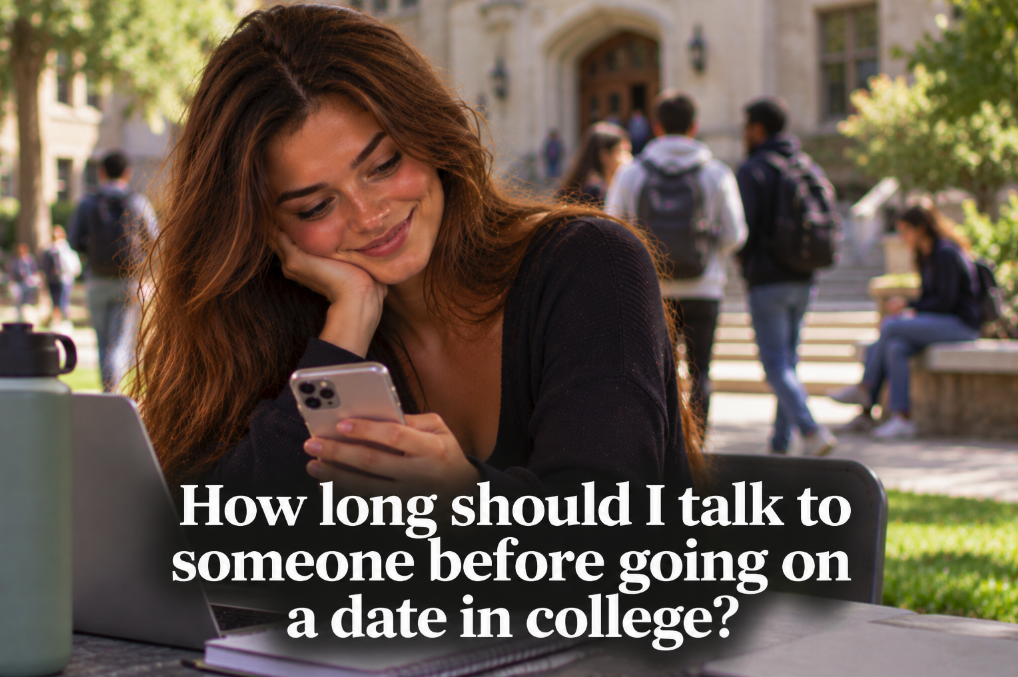
You matched, exchanged numbers or started talking after class. The messages are good, the flirting seems mutual and now comes the classic college dating question: how long are you supposed to talk before actually going on a date?
There is no magic number of days. For some people, a few good conversations are enough. Others feel more comfortable talking for a week or two before meeting one-on-one. The better question is whether you know enough to feel interested, reasonably comfortable and ready to see if the chemistry works away from your phone.
You do not have to finish the talking stage before meeting
A first date is not the reward you unlock after completing a required amount of texting. It is one of the ways you get to know someone.
Long message exchanges can create a strong sense of familiarity, but digital chemistry does not always translate perfectly in person. Meeting for coffee, lunch or a walk can answer questions that another week of texting cannot.
A few signs you may be ready
If conversation feels reciprocal, both people initiate sometimes and you have enough basic context to feel comfortable meeting, there may be little reason to delay simply because you think there is a dating rule you have not satisfied.
It also helps if the person can make a concrete plan and communicates respectfully. A simple “Want to grab coffee after class Thursday?” often tells you more about their intentions than dozens of vague messages about hanging out “sometime.”
Talking for too long can create an imaginary relationship
Weeks of constant texting can make two people feel surprisingly close before they have spent meaningful time together. That can be exciting, but it also gives both people plenty of space to fill in missing information with assumptions.
You may start imagining compatibility based on messages alone. Then the first date has to carry the weight of a connection that has already become emotionally significant.
If both people clearly want to meet, moving toward a low-pressure date can keep expectations more realistic.
But there is no need to rush because someone pressures you
The opposite mistake is treating quickness as proof of confidence. You are allowed to want more conversation first, especially if you met online and have not interacted in person.
Before meeting someone new, choose a public place, tell a friend where you are going and arrange transportation you control. If the other person becomes irritated because you want basic comfort or safety measures, that reaction is more useful information than any dating timeline.
College schedules can make timing weird
Classes, jobs, clubs, sports and exams can turn a simple date into a scheduling project. Someone being unavailable for several days does not necessarily mean the connection is going nowhere.
Look at whether they help find an alternative. “I have an exam Thursday, but I’m free Saturday afternoon” shows effort. Repeatedly saying they are busy without ever suggesting another time shows something different.
What if you already know each other from class?
If you have been talking regularly in person, you may not need much of a separate texting stage at all. You already have information about how they communicate, how they treat other people and whether conversation flows face-to-face.
In that situation, asking them for coffee after class can be a very small next step rather than a dramatic date proposal.
Use readiness, not a countdown
Instead of asking whether three days, one week or two weeks is the correct amount of time, ask whether the interaction has enough mutual interest to justify meeting.
If the answer is yes, suggest something easy and specific. A first date does not need to establish where the relationship is going. It only needs to answer one question: do we enjoy spending time together enough to want a second one?
That is usually more useful than extending the talking stage simply because nobody knows who is supposed to make the next move.