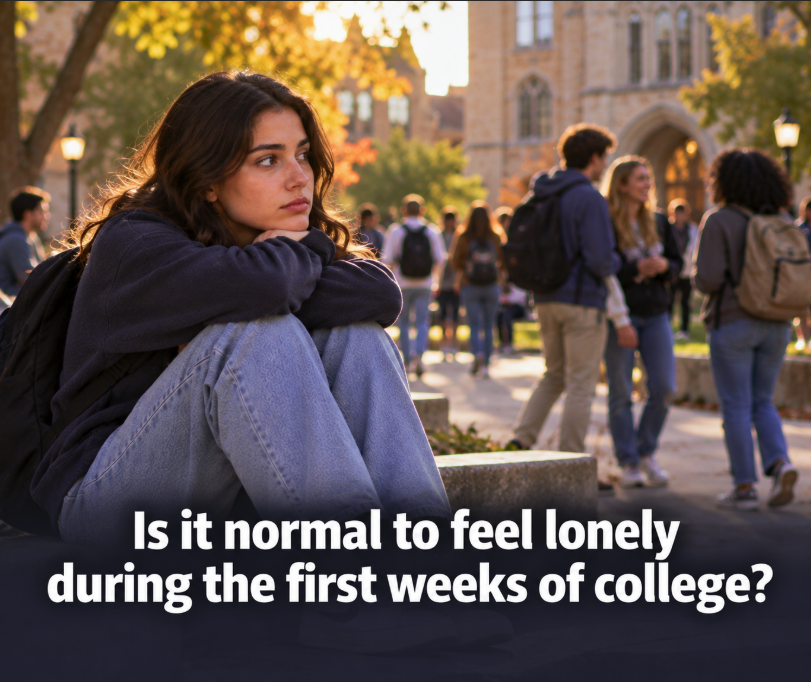
You walk into class and it looks like everyone already knows where to sit. People arrive in pairs, save seats for friends, make weekend plans before the professor even starts talking, and somehow seem to have acquired a complete social circle while you were still figuring out where the library is.
If that’s what college feels like right now, the important thing to remember is that appearances are misleading. A visible group is not necessarily a closed group, and having people to sit with does not mean someone has found their closest friends. College friendships keep changing as classes, schedules, clubs, housing, jobs, and interests change.
Stop waiting for an invitation into a whole group
Trying to “join a group” can make socializing feel like an audition. A much easier goal is to connect with one person at a time. Talk to the student sitting beside you before class. Ask someone whether they understood the assignment. Suggest grabbing coffee after a lecture. If you recognize someone from another class, say hello instead of waiting for them to do it first.
Most friendships do not begin with a dramatic moment. They begin with repeated, ordinary contact.
Use repetition to your advantage
Friendship becomes easier when you regularly see the same people. Sit in roughly the same area in class. Go to the same club meetings. Study in the same common spaces. Attend recurring campus activities rather than trying a different event every night.
Repeated contact turns a stranger into a familiar face, and a familiar face is much easier to talk to.
Make small invitations
You do not need to organize a party or propose an elaborate weekend plan. Low-pressure invitations are often better: “I’m getting coffee after class, want to come?” “Are you studying for the exam later?” or “I’m going to that campus event Thursday—want to meet there?”
These invitations give the other person an easy way to say yes without making the interaction feel unusually important.
Do not interpret every no as rejection
College schedules can be chaotic. Someone declining lunch may genuinely have another class, a shift at work, practice, homework, or plans they made earlier. Look for patterns rather than treating one unavailable afternoon as a verdict on whether someone likes you.
If you initiate several times and the other person never reciprocates, put your energy elsewhere. Friendship should eventually involve effort from both sides.
Go where conversation is built in
Large parties can be surprisingly difficult places to make actual friends. Smaller environments with a shared activity often work better: student organizations, recreational sports, volunteering, study groups, campus jobs, workshops, language exchanges, gaming groups, or hobby clubs.
The activity gives you something to talk about, which removes much of the pressure of inventing conversation from nothing.
Remember that groups are less permanent than they look
Especially early in college, some groups form simply because people live on the same floor, attended orientation together, or happened to sit beside each other during the first week. Some become lasting friendships. Others quietly dissolve.
You are not necessarily late. There is no deadline after which everyone’s social life becomes permanently fixed.
A better goal than “finding your group”
Instead of asking yourself how to acquire a complete friend group, aim for smaller milestones: learn one person’s name, have one conversation after class, exchange numbers with someone, attend the same club twice, or invite one person to study.
A social circle is usually the result of those small interactions accumulating over time. You do not need to break into a finished group. You need a few opportunities to turn familiar faces into people you actually know.