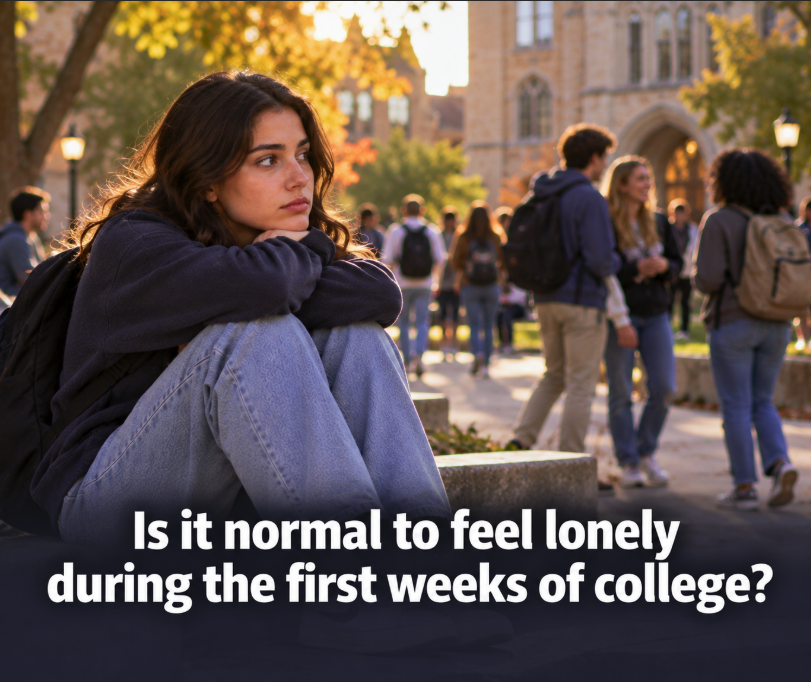
The first weeks of college are supposed to look exciting: new friends, late-night conversations, campus events, independence, and the beginning of a completely new life. That image can make it especially confusing when your actual experience includes eating alone, missing home, scrolling through other people’s plans, or wondering whether everyone except you has already figured college out.
Feeling lonely during this transition can happen even when you are surrounded by people. A new environment does not instantly create close relationships, familiar routines, or a sense of belonging. Those things usually take time.
The first weeks can create a distorted picture
Early college social life moves fast. People meet roommates, orientation groups, classmates, and neighbors and may immediately start appearing together around campus. From the outside, those connections can look established and permanent.
They often are not. Some early friendships grow stronger, while others fade as schedules, interests, classes, and social circles change. Seeing someone sitting with a group does not tell you how secure or connected that person actually feels.
Missing your old life does not mean college was the wrong choice
You can be excited about college and still miss your family, friends, bedroom, routines, pets, neighborhood, or simply the feeling of knowing how everything works. Those emotions are not mutually exclusive.
A major transition can involve both opportunity and loss. You are building something new while temporarily living without many of the familiar things that previously made everyday life comfortable.
Adjustment does not happen on a universal schedule
Some students seem comfortable almost immediately. Others need weeks or months before campus starts feeling familiar. Some reconsider their housing, program, or college altogether. There is no single timetable that proves whether someone is doing college correctly.
Social media can make the adjustment period look unusually smooth because people are much more likely to post the exciting dinner, party, game, or new-friend photo than the quiet evening when they felt homesick.
Focus on repetition, not instant best friends
If you are lonely, the pressure to “find your people” can make every interaction feel like a test. A smaller goal is often more useful: create repeated contact.
Sit near familiar classmates. Return to the same club. Eat in a common area instead of always taking food back to your room. Say hello to the person you keep seeing in your residence hall. Attend the second meeting even if the first one felt awkward.
Familiarity is often the bridge between strangers and friends.
Give people small opportunities to include you
You do not have to wait until someone notices that you are lonely. Ask a classmate whether they want to study together. Tell someone in your dorm you are heading to lunch and ask if they want to come. Join a campus event even if you do not have someone to arrive with.
Small invitations are easier to make and accept than trying to create an entire friendship at once.
Keep some connection to home without living entirely through it
Calling people you already love can be comforting, especially during a major transition. At the same time, spending every free moment on the phone with home can make it harder to engage with the place where you currently are.
Try to leave room for both: familiar relationships that support you and new experiences that slowly make campus feel less unfamiliar.
If you are thinking about leaving, slow the decision down when you can
Some students do decide that a particular college, housing situation, or program is not right for them. Changing direction can be a legitimate decision. But a difficult first few weeks do not necessarily predict what the rest of the semester will feel like.
Before making a major decision, it can help to talk with people who understand your specific situation: family or trusted friends, an academic adviser, residence-life staff, student support services, or a campus counseling service. They may help you separate temporary transition stress from problems that genuinely require a change.
You are seeing the beginning, not the finished version
During the first weeks, almost everything is unfinished: friendships, routines, confidence, familiarity with campus, and your sense of where you belong. That uncertainty can feel lonely precisely because you have not had enough time to build the ordinary connections that make a place feel like yours.
You do not need to love every minute of the transition for college to eventually become comfortable. Give yourself opportunities to connect, pay attention to how things change over time, and get support when the loneliness feels persistent or overwhelming.